
How We Manufacture Eyewear in Türkiye
We manufacture eyewear at our factory in Kağıthane, Istanbul. Our production includes injection moulding, surface finishing, decoration, assembly, lens fitting, quality control and packaging. The exact process depends on the frame design and materials used.
Our Factory and Production
- Location
- Our factory is in Kağıthane, Istanbul, Türkiye
- Production equipment
- 8 injection moulding machines
- Main production processes
- Injection moulding, vibratory finishing, hand sanding, decoration and frame assembly
- Decoration options
- Primer and UV printing, hand painting, or flat hinge fitting and colour application
- Marking
- Pad printing of logo, model, color code and size on the temples
- Quality control
- Checks during production, after assembly and before packaging
- Factory visits
- Available to B2B partners by appointment
How Our Manufacturing Process Works
For injection-moulded models, production starts with the frame front and temples. We mould the parts, remove rough edges through vibratory finishing and hand sanding, then apply the selected colour and decoration.
The parts are assembled with hinges and screws. After the initial inspection and washing, we apply varnish, fit demo or sun lenses, and print the required markings on the temples. Finished frames undergo a final inspection before packaging. Some models use different materials or construction methods, so their production route may vary.
Size of our production facility
The figures below describe our Kağıthane factory where these production stages run. Floor area, molding capacity and headcount show the scale of our plant before you schedule a visit or a bulk order.
- 3,500 m² production area
- 8 injection moulding machines
- 85 employees
Production stages
Our manufacturing stages
Stages 4A, 4B and 4C are alternative finishing routes. We select the route according to the model's construction, colour and surface design.
-
 Stage 1
Injection moulding
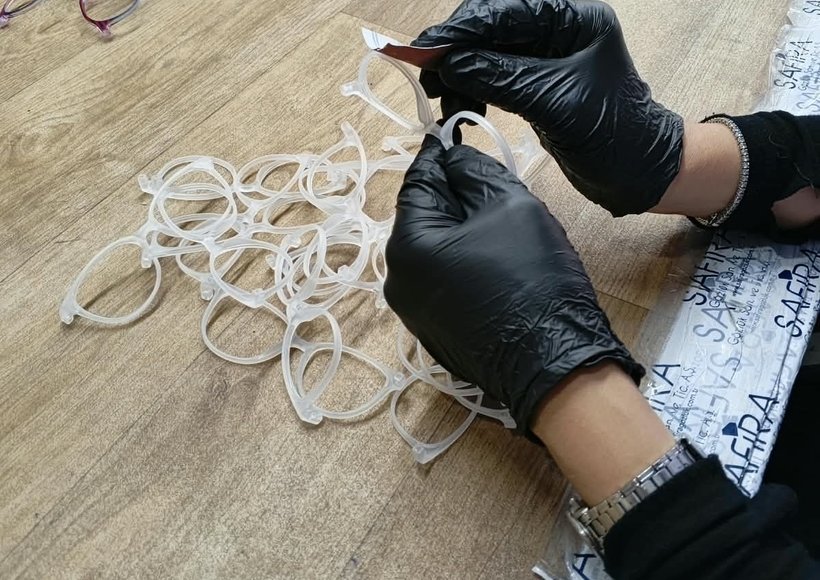
We inject molten thermoplastic into steel moulds to form the frame fronts and temples. The mould determines the shape and dimensions of each part.
-
 Stage 2
Vibratory finishing
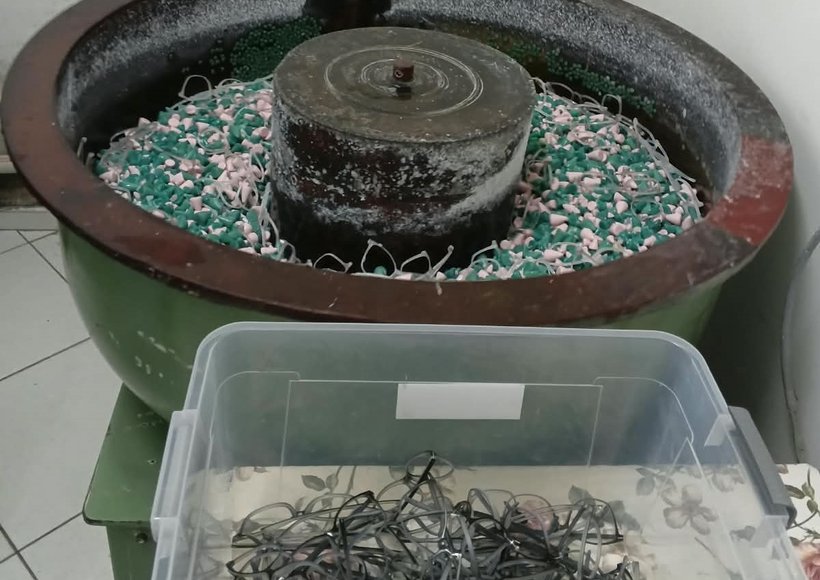
We process the moulded parts in vibrating machines with abrasive media to remove sharp edges and smooth the surfaces.
-
 Stage 3
Hand sanding
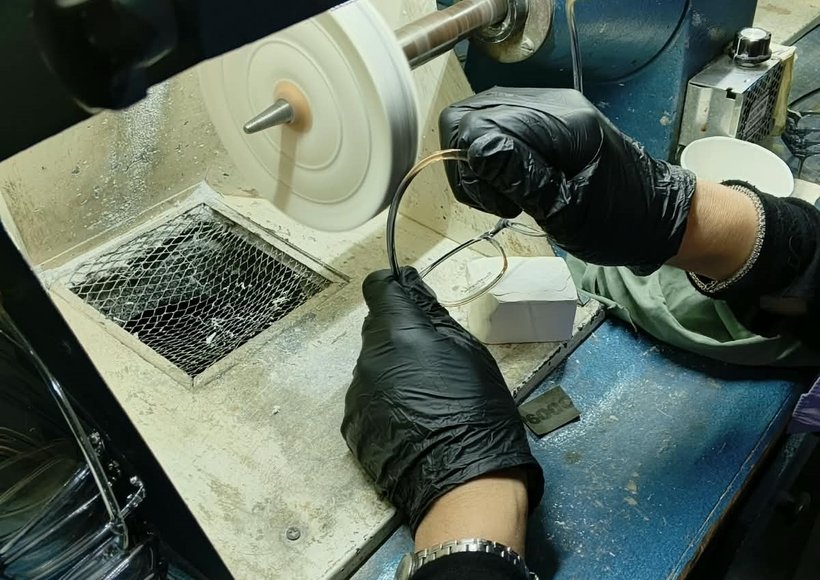
Our team sands gate marks and mould parting lines to prepare the surfaces for decoration.
-
 Stage 4A
Primer and UV printing preparation
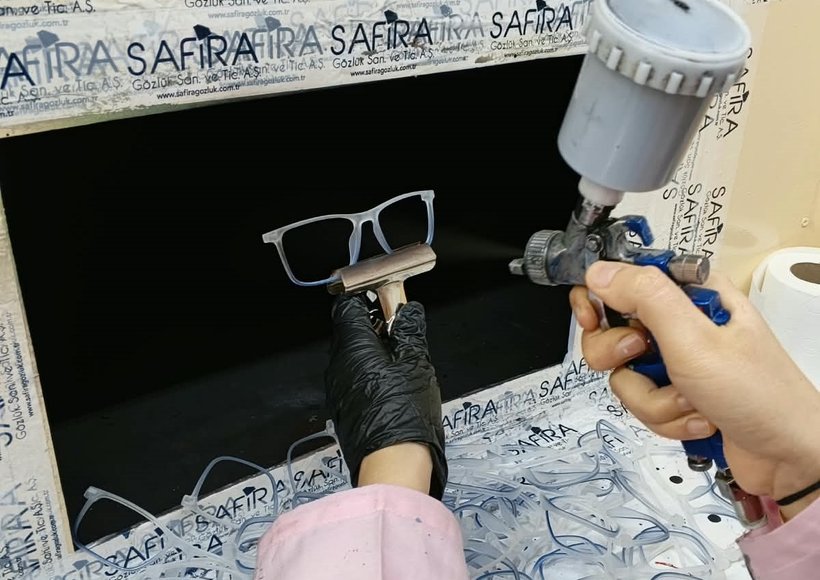
We apply primer to models that will receive UV-printed designs. This prepares the surface for the printing process.
-
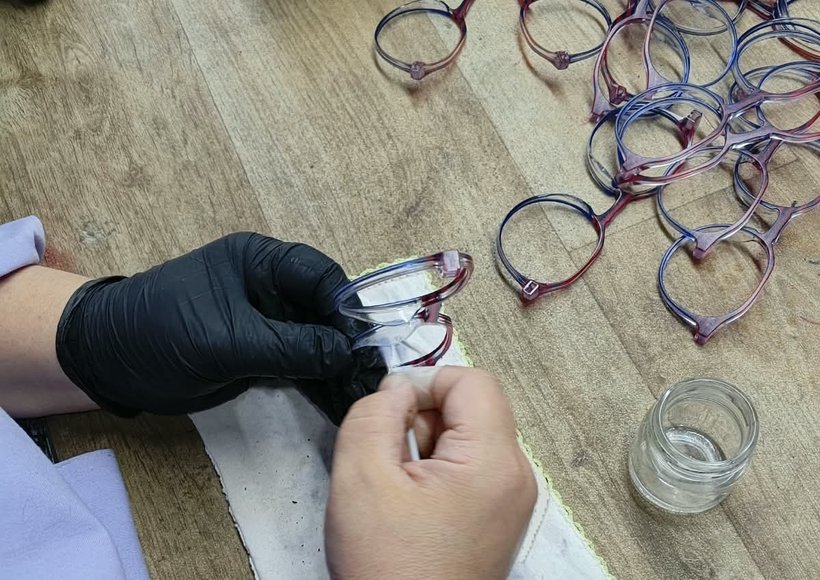 Stage 4B
Hand painting
We apply colours and decorative details by hand to models that require this type of finish.
-
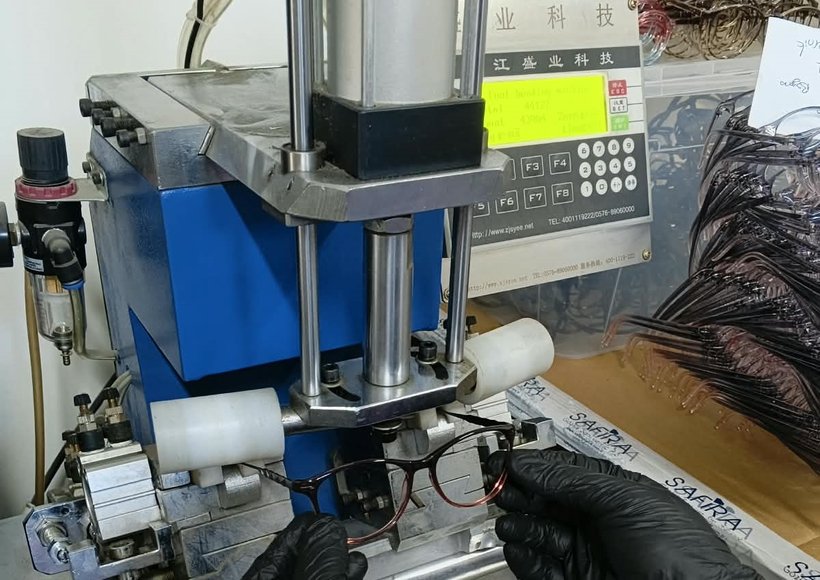 Stage 4C
Flat hinge and colour
For models designed with flat hinges, we fit the hinges and apply the specified colour.
-
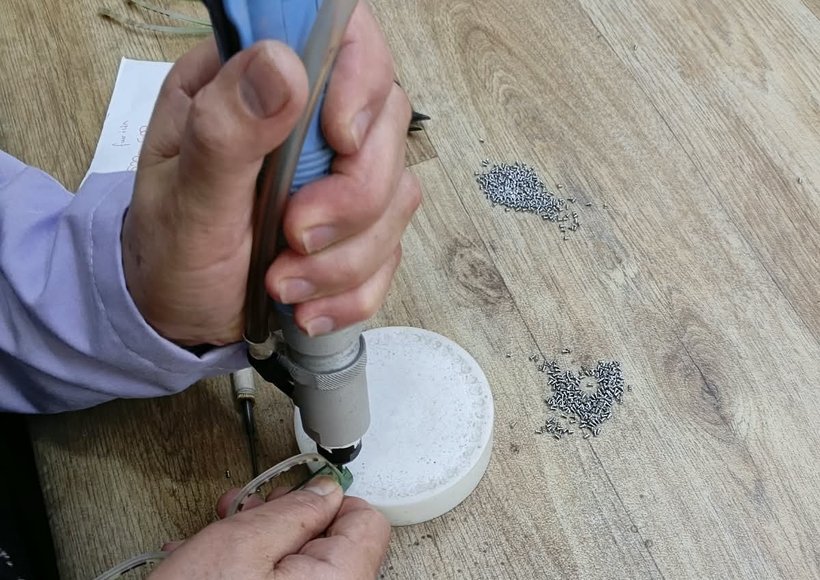 Stage 5
Assembly
We join the frame fronts and temples with hinges and screws, then adjust hinge movement.
-
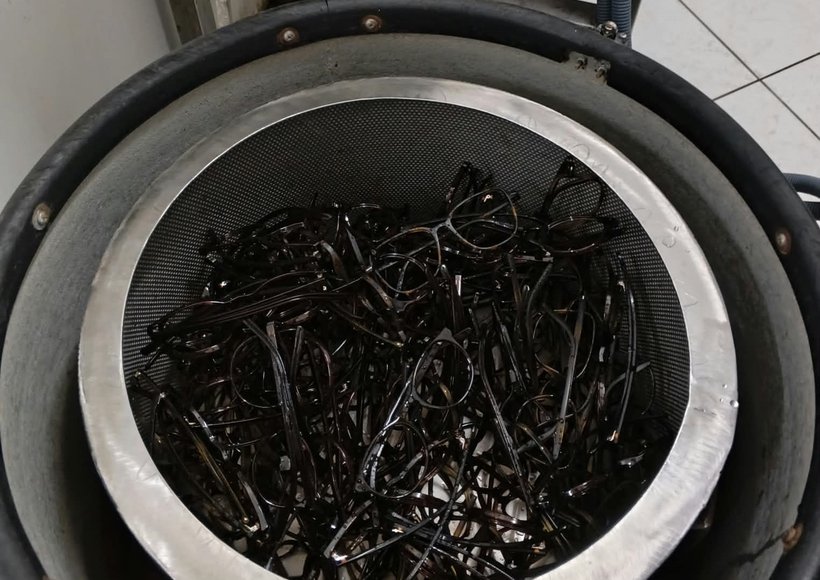 Stage 6
Pre-final inspection and washing
We check the assembled frames for surface defects, colour consistency and hinge function before washing them.
-
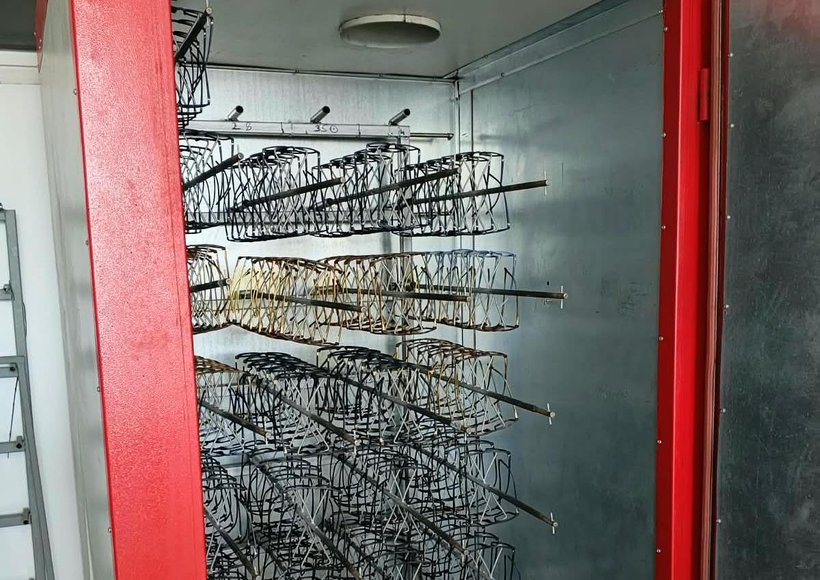 Stage 7
Varnishing
We apply clear varnish to protect the finish and achieve the specified matte or gloss appearance.
-
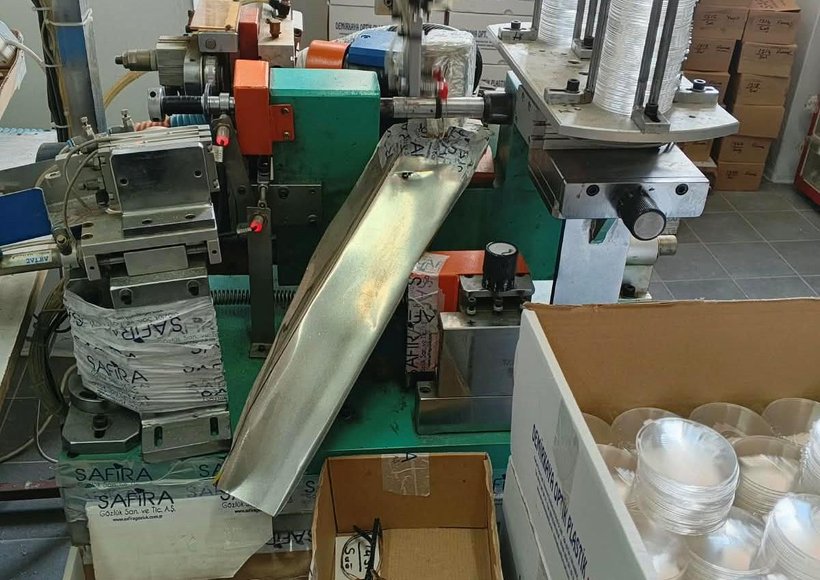 Stage 8
Lens fitting
We fit demo lenses to optical frames and the specified filter lenses to sunglasses.
-
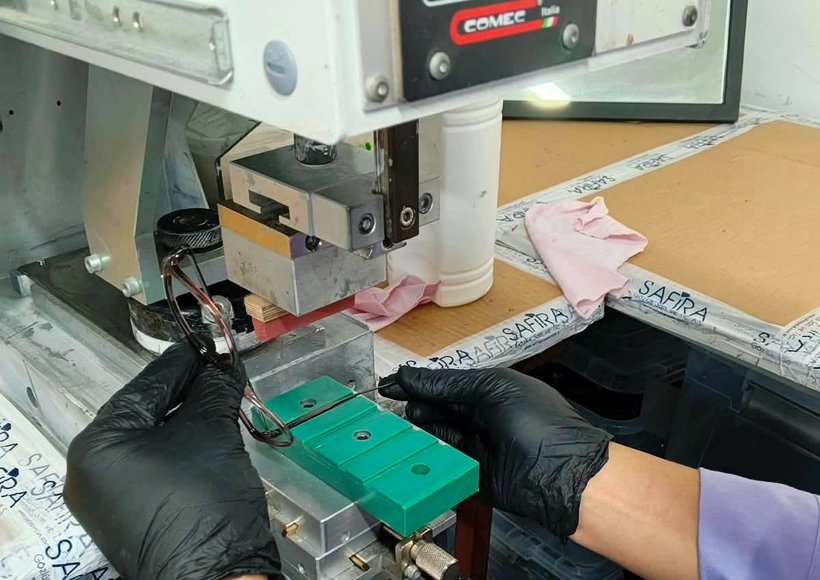 Stage 9
Pad printing
We use silicone printing pads to apply logos, model references, colour codes and size markings to the temples.
-
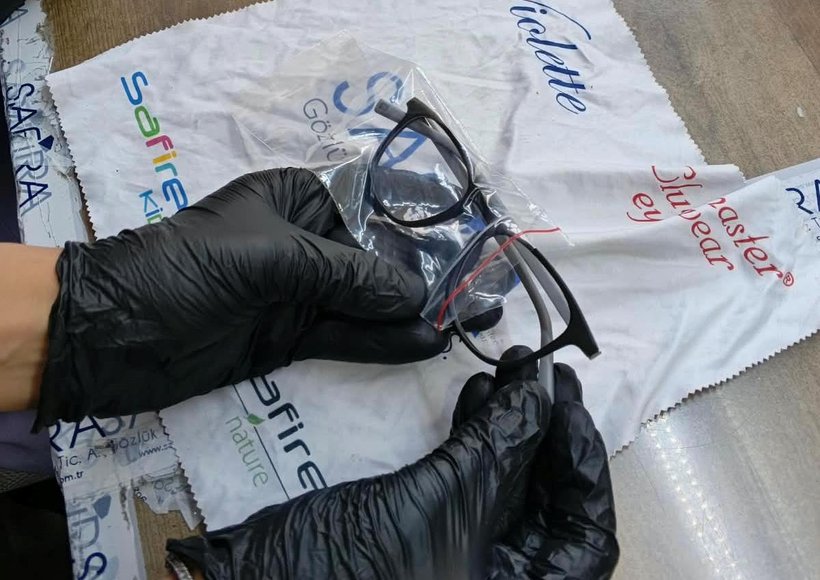 Stage 10
Final quality control
We inspect the finished frames for dimensions, alignment, hinge movement, surface condition, print quality and lens fit.
-
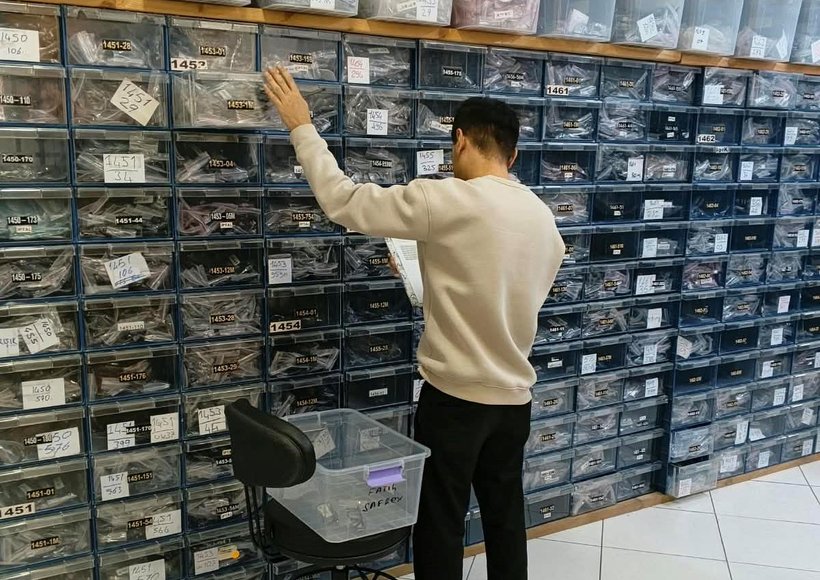 Stage 11
Packaging
We pack the frames with the agreed cases, cleaning cloths, labels and other accessories, ready for shipment.
Decoration Methods
The decoration method depends on the frame material, design and required finish.
| Route | Stages | What it achieves | Typical use |
|---|---|---|---|
| Primer and UV printing | 4A, then UV printing | We prepare the surface with primer before UV printing. This route is suitable for multicolour artwork, patterns and printed private-label designs. | Patterned fashion models, children's prints, private-label artwork |
| Hand painting | 4B | We apply colour and decorative details by hand. This method is used for models that require hand-finished effects. | Models that need painted accents or color effects |
| Flat hinge and colour | 4C | We fit flat hinges and apply the specified colour to models designed for this construction. | Slim models built with low-profile flat hinges |
Quality Checks During Production
We inspect frames at different stages rather than waiting until the end of production. These checks help identify defects before the next operation begins.
| Stage | What is checked |
|---|---|
| After sanding (Stage 3) | We check the surface for gate marks, mould lines and rough areas before decoration |
| During assembly (Stage 5) | We check hinge movement, screw fitting and temple tension |
| Pre-final inspection (Stage 6) | We inspect surface condition, colour and hinge function before varnishing |
| After lens fitting (Stage 8) | We check that demo or sun lenses sit correctly in the frame |
| After pad printing (Stage 9) | We check the logo and product markings for position, legibility and print quality |
| Final inspection (Stage 10) | We check dimensions, alignment, hinge movement, surface finish, markings and lens fit |
| Before shipment (Stage 11) | We check quantities, model and colour references, labels and the agreed accessories |
What We Check on Finished Frames
Our inspection criteria cover the main dimensions and functional and visual properties of each model. Requirements are defined according to the product specification, approved sample and applicable standards. ISO 12870 is a relevant reference for spectacle-frame requirements and test methods. Where a customer requires specific tests or documented results, these can be discussed and arranged for the relevant models.
Frame dimensions
We check lens size, distance between lenses and temple length using the boxing system defined in ISO 8624.
Alignment and symmetry
We inspect the front, bridge and temples for twisting, uneven positioning and differences between the two sides.
Hinge function
We check that the temples open and close correctly and remain in their intended position.
Surface and finish
We look for scratches, bubbles, varnish runs and uneven colour on visible surfaces.
Printing and markings
We check the logo, model reference, colour code and size information for correct placement and legibility.
Lens fit
We check that demo and sun lenses are seated correctly in the frame rim.
Materials Used in Our Production
The materials used depend on the model and its construction. We specify the material for each order and confirm the agreed details in the product documentation.
| Material | How it is processed | Used in |
|---|---|---|
| Injection-moulded thermoplastics | Used for frame fronts and temples | Sunglasses, reading glasses and children's eyewear |
| TR90-type polyamide and PEI | Used in selected lightweight and flexible frame designs | Memory-style models and clip-on constructions |
| Stainless steel and titanium | Used in metal-frame designs and components. These models follow their relevant assembly and finishing processes | Metal frames |
| Hinges, screws and nose pads | Fitted during assembly and also available as replacement parts | Spare parts |
New models
From Design to First Production
For exclusive OEM models, production begins with the buyer's design brief. We develop the technical specifications and samples before releasing the model for bulk manufacturing.
Design brief
The buyer provides sketches, reference frames or details about the required style, dimensions and target price.
Technical drawing
We prepare a dimensioned drawing, including the relevant boxing-system measurements.
Mould development
We arrange the steel injection moulds required for the frame front and temples. Toolmaking is carried out in Istanbul, Türkiye.
First samples
We produce trial parts and assemble sample frames for review.
Sample approval
The buyer checks the fit, colour, finish and markings and approves the sample or requests changes.
Production release
Once approved, the sample becomes the reference for bulk production.
Manufacturing Questions
How are plastic eyewear frames finished after injection moulding?
After moulding, we use vibratory finishing and hand sanding to smooth the parts. The frames then follow the appropriate decoration route before assembly.
Which decoration methods do you use?
We use primer and UV printing, hand painting, and flat hinge fitting with colour application. The method depends on the design and finish required for each model.
Why do optical frames have demo lenses?
Demo lenses help maintain the shape of the frame during handling, storage and display. Opticians remove them and fit the customer's prescription lenses.
What do you check during final quality control?
We inspect frame dimensions, alignment, symmetry, hinge movement, surface finish, printing and markings, and lens fit against the agreed product specifications.
Can we arrange independent product testing?
Yes. On request, we can arrange to send samples to an independent laboratory selected for the required tests. Depending on the product, these may include ISO 12870 frame tests or EN 16128 nickel-release testing.
Can B2B buyers visit the factory?
Yes. We welcome B2B partners to visit our factory in Kağıthane, Istanbul, by appointment. Contact our export team to arrange a suitable date.
Visit Our Factory in Istanbul
B2B buyers can arrange a factory visit to see our equipment, production stages and quality checks. Contact our export team to discuss a visit or ask about our manufacturing and OEM services.