Spring Hinge Box
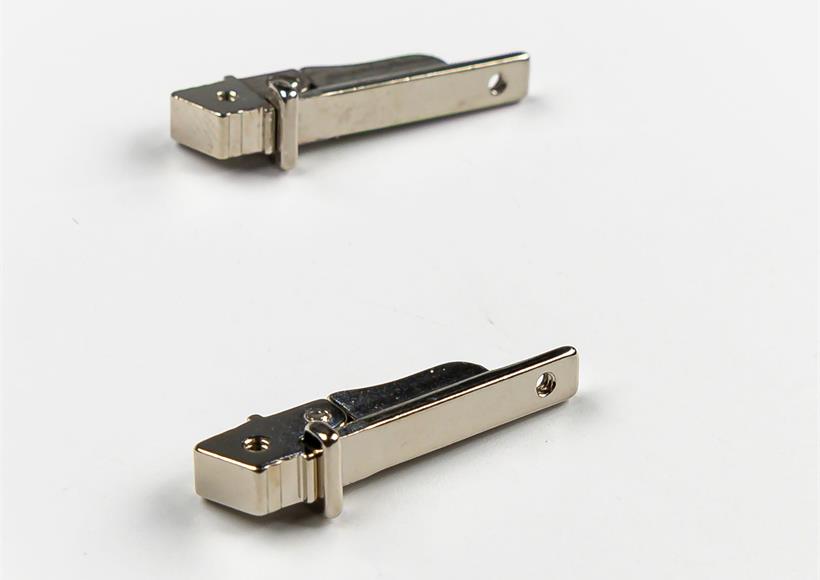
Sprung hinge box that lets the temple flex outward.
- Material
- Stainless steel
- Fits
- Plastic and metal temples
- Pack
- 100 pairs

Safira Eyewear supplies hinges, screws, nose pads, pad arms, temple tips and demo lenses from Istanbul, Türkiye, to opticians, repair workshops, distributors and frame brands that need parts for after-sales service.
Safira Eyewear supplies spring hinges, hinge plates, pad arms, screws and demo lenses from Istanbul in bulk packs for opticians, workshops and distributors. Parts can be matched to Safira frames when the temple model code and color are provided.
Sprung hinge box that lets the temple flex outward.
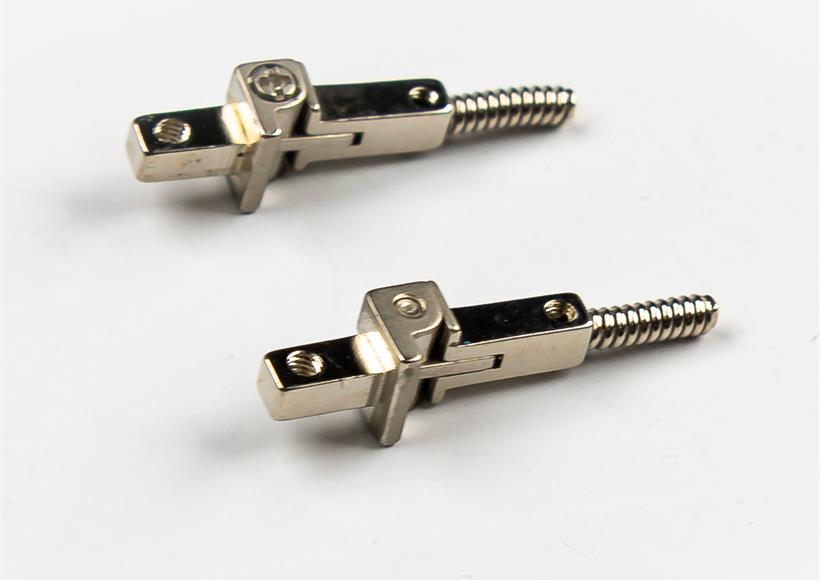
Screw-pin spring hinge insert for temple repair.
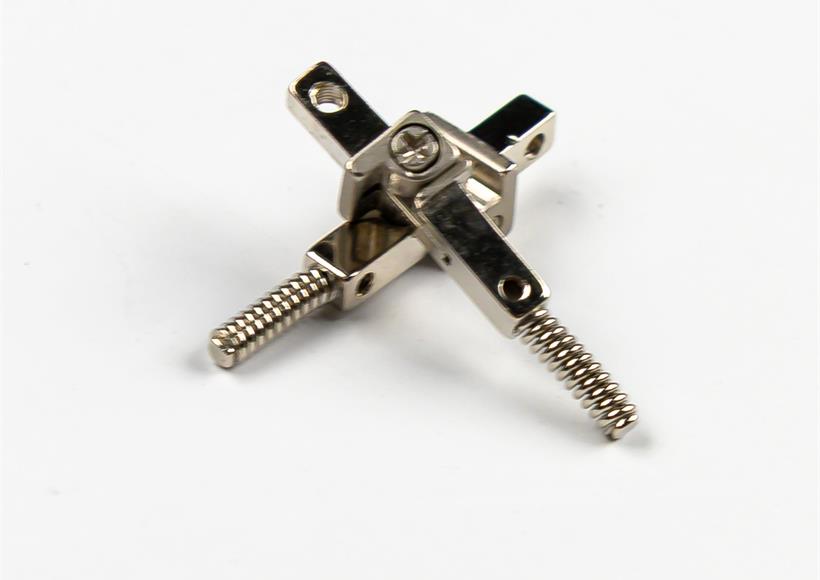
Double-spring flex hinge mechanism for wide temple opening.
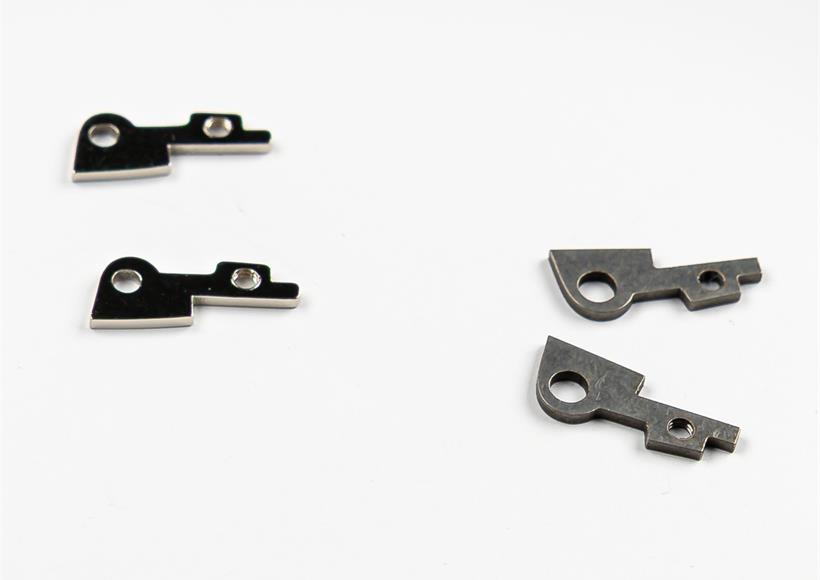
Silver and gunmetal hinge link plates for frame assembly.
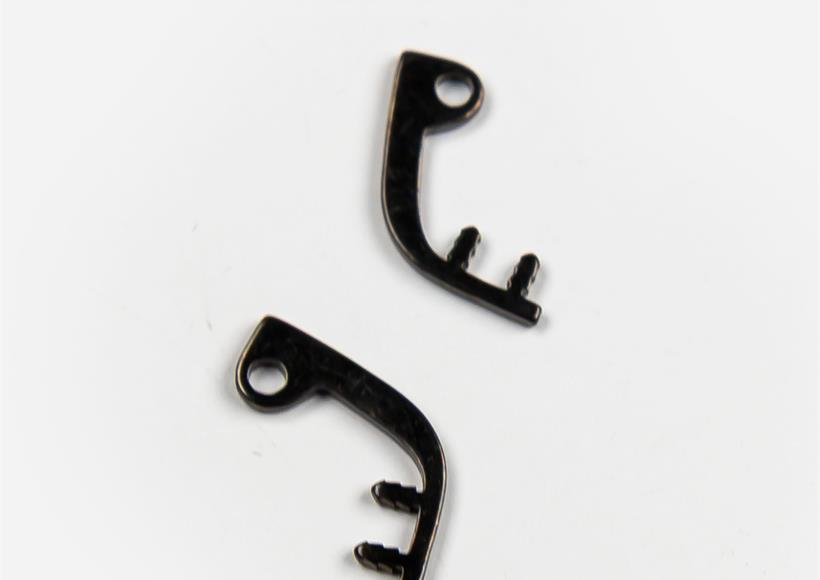
Black metal pad arms for adjustable nose pads on metal frames.
Screws make up most of the references, because each thread comes in several lengths and head sizes. M1.0 to M1.6 covers the common eyewear hinge and pad screws used on our metal and plastic frames.
A shared vocabulary helps buyers and workshops order the right part the first time. Using the same names for hinges, pad arms, tips and demo lenses cuts mis-orders when the only information available is a worn frame or a temple marking.
| Part | Function |
|---|---|
| Hinge (joint) | Connects the temple to the front and lets it fold |
| Spring hinge | Lets the temple open beyond its normal angle and spring back |
| End piece | The part of the front that carries the hinge |
| Rim lock (closing block) | Closes a metal rim around the lens with a small screw |
| Pad arm | Holds the nose pad and allows fit adjustment |
| Nose pad | Rests on the nose and spreads the frame's weight |
| Temple tip | Covers the end of the temple behind the ear |
| Bush (rimless) | Plastic sleeve that protects the drilled lens hole from the screw |
| Demo lens | Keeps the frame front in shape until prescription lenses are fitted |
Eyewear screws use small metric threads. The number after "M" is the thread diameter in millimeters; the pitches below are the ISO metric coarse pitches for these diameters. Screws are usually described as thread diameter × length × head diameter, for example 1.4 × 3.0 × 2.0 mm.
| Thread | Diameter | Pitch | Typical use |
|---|---|---|---|
| M1.0 | 1.0 mm | 0.25 mm | Nose pad screws |
| M1.2 | 1.2 mm | 0.25 mm | Fine hinges, rim locks, rimless fittings |
| M1.4 | 1.4 mm | 0.30 mm | Standard hinge screws |
| M1.6 | 1.6 mm | 0.35 mm | Heavier hinges |
The hinge decides which screw and replacement part fit. Barrel, spring and flat hinges take different screw lengths and head sizes; self-aligning screws are preferred on spring hinges so the barrels line up during repair.
Interlocking barrels on the front and temple, joined by a hinge screw. Hinges are often described by the number of barrels.
A sprung mechanism inside the temple. Replacement usually needs a self-aligning screw to line up the barrels.
A low-profile hinge set into slim plastic frames.
A long pointed guide lines up the hinge barrels; the guide snaps off at a break point after tightening.
Closes the rim lock on metal frames to hold the lens.
A screw and nut pass through a plastic bush in the drilled lens to fix the bridge and temples.
The fitting on a replacement pad must match the holder on the frame's pad arm. Screw-in and push-in pads are not interchangeable; we match the fitting from the frame model code or from a clear photo of the pad arm.
| Type | How it attaches | Points to note |
|---|---|---|
| Screw-in | Stem fixed into a box on the pad arm with a small screw | Secure and widely used on metal frames |
| Push-in | Stem clips into a matching holder on the pad arm | Fast to replace; the holder shape must match |
| Silicone pads | Soft pad body | Soft silicone with a secure fit |
| Hard plastic pads | Firm pad body | Keep their shape; less grip than silicone |
Part identification
We match each part from the information below. A customer can send the temple marking, part type, measurements and photos in one message so the workshop receives the correct hinge, screw or pad without a second query.
Note the model code, color code and size printed inside the temple. For our own frames, this is enough for us to match parts.
Use the part names above to say which part is needed: hinge, screw, pad, pad arm or temple tip.
For screws, measure thread diameter, length and head diameter. For pads, check the fitting type and size.
Note the color of visible parts such as screws and temple tips.
A clear photo of the part and the frame helps us confirm the match.
Our screws and hinges are made of stainless steel. Nose pads are made of silicone or plastic, and temple tips of acetate or silicone.
Metal parts that stay in direct and prolonged contact with the skin, such as pad arms and temple ends, fall under the EU nickel release limit of 0.5 µg/cm² per week in REACH Annex XVII entry 27. EN 16128 is the reference test method for spectacle frames. We can arrange independent testing on request.
Our team confirms these details before a parts order is packed. Most queries concern screw length and pad fitting.
| Item | Details |
|---|---|
| Part reference | Our part code, or the frame model and color code the part must fit |
| Dimensions | Screw thread, length and head diameter; pad fitting and size |
| Material and finish | Stainless steel, silicone or acetate, and the color of visible parts |
| Quantities | Number of packs per part, or a mixed assortment |
| Packaging and labeling | Bulk packs, assortment boxes, labels with part codes |
| Compliance documents | Material declaration and nickel release test reports where required by your market |
| Export documents | Commercial invoice, packing list, certificate of origin, and an A.TR movement certificate for EU shipments |
Hinges, pads and tips matched to the frames you buy from us.
Parts packed with a frame order so retailers can service their customers.
Mixed boxes of screws, pads and tips for optician workshops.
Packs labeled with part codes, or with your own labels.
Yes. Give us the frame model code and color from the inside of the temple, and we will match the hinge, screws, pads or temple tips.
Eyewear screws use small metric threads. M1.4 is the most common hinge screw, M1.2 is used on finer hinges and rim locks, and M1.0 is common for nose pad screws. The number after M is the thread diameter in millimeters.
Screws are described by thread diameter, length and head diameter, for example 1.4 × 3.0 × 2.0 mm. Length is usually measured from under the head to the end of the thread; for self-aligning screws it is often measured from the top of the head to the break point.
A self-aligning screw has a long, pointed guide that helps line up hinge barrels, especially on spring hinges. Once the screw is tightened, the guide is snapped off at a break point.
Screw-in pads are fixed to the pad arm box with a small screw. Push-in pads have a stem that clips into a matching holder on the pad arm. The fitting on the replacement pad must match the pad arm on the frame.
Parts that are in direct and prolonged contact with the skin, such as pad arms and temple ends, fall under the EU nickel release limit of 0.5 µg/cm² per week in REACH Annex XVII entry 27. EN 16128 is the reference test method for spectacle frames.
Parts of spectacle frames and mountings are classified under HS subheading 9003.90. National tariff lines may add further digits, so confirm the full code with your customs broker.
Yes. Opticians, repair workshops and distributors order parts separately in bulk packs, and parts can also be added to a frame order for after-sales service.
Send the part codes and quantities, or the frame model the parts must fit. Bulk packs for workshops and after-sales kits packed with a frame order are both available from the same spare-parts line.